(spoiler alert, obviously)
I saw The Odyssey last week, finally, and I have So Many Thoughts about it. The shortest version, though, is—this is a great movie and, simultaneously, an almost comically bad telling of the Odyssey myth. I’m not saying that because it’s unfaithful to Homer (or, more precisely, because I give a shit about it being unfaithful to Homer), but because the basic plot beats of the Odyssey just don’t match the story Nolan wants to tell. The movie that results is a gorgeous and thoughtful epic, except for the parts where characters do things that make no sense because somebody else with the same name did them in another thing called The Odyssey.
First the good bits. The Odyssey is one of the most beautiful movies I have ever seen in my life; Nolan composes a frame so beautifully, and so colorfully. I’ve seen people complain that the movie is drab and gray, but I think that really misunderstands how Nolan is using his palette—the Trojan War scenes are ugly, because they’re flashbacks from a traumatized man looking back on the biggest mistake of his life. Similarly, Calypso’s refuge is a bland tidal flat because Odysseus feels nothing while he is there. This version of Calypso does not really offer pleasure; she offers oblivion, in a place that gives its inhabitants nothing to react to. In contrast, Nolan’s seascapes are vibrant and lush. You understand why these characters want to be on the water, or why the brilliant green pine forests and hills of the islands might seem like safe places to land. The palace at Ithaka is dark and sinister, with the soured-party energy it needs. The aesthetics of this movie are intentional, and gorgeous when they want to be.
Those composed vistas, however, are staging grounds for some of the most disorienting scenes I’ve ever seen in my life. That’s on purpose too. Nolan is an auteur of confusion, and his action scenes are emotionally coherent despite being impossible to follow. My favorite example of this was the battle with the Lastrygonians: a massacre/dream ballet in which Odysseus’ crew, having wandered into a world that makes no sense, is violently consumed by it. Sound mixing was hard to follow, in a story about characters suddenly unable to speak the language; the map is disorienting in a story of disorientation. Nolan’s Odyssey is a story of apex predators slowly realizing they have destroyed their own ecosystem, which is a theme Nolan returns to pretty often in his career but that fits the Trojan War like a glove. The Greeks broke the rules of their world to win, and now have to exist in the catastrophe they created.
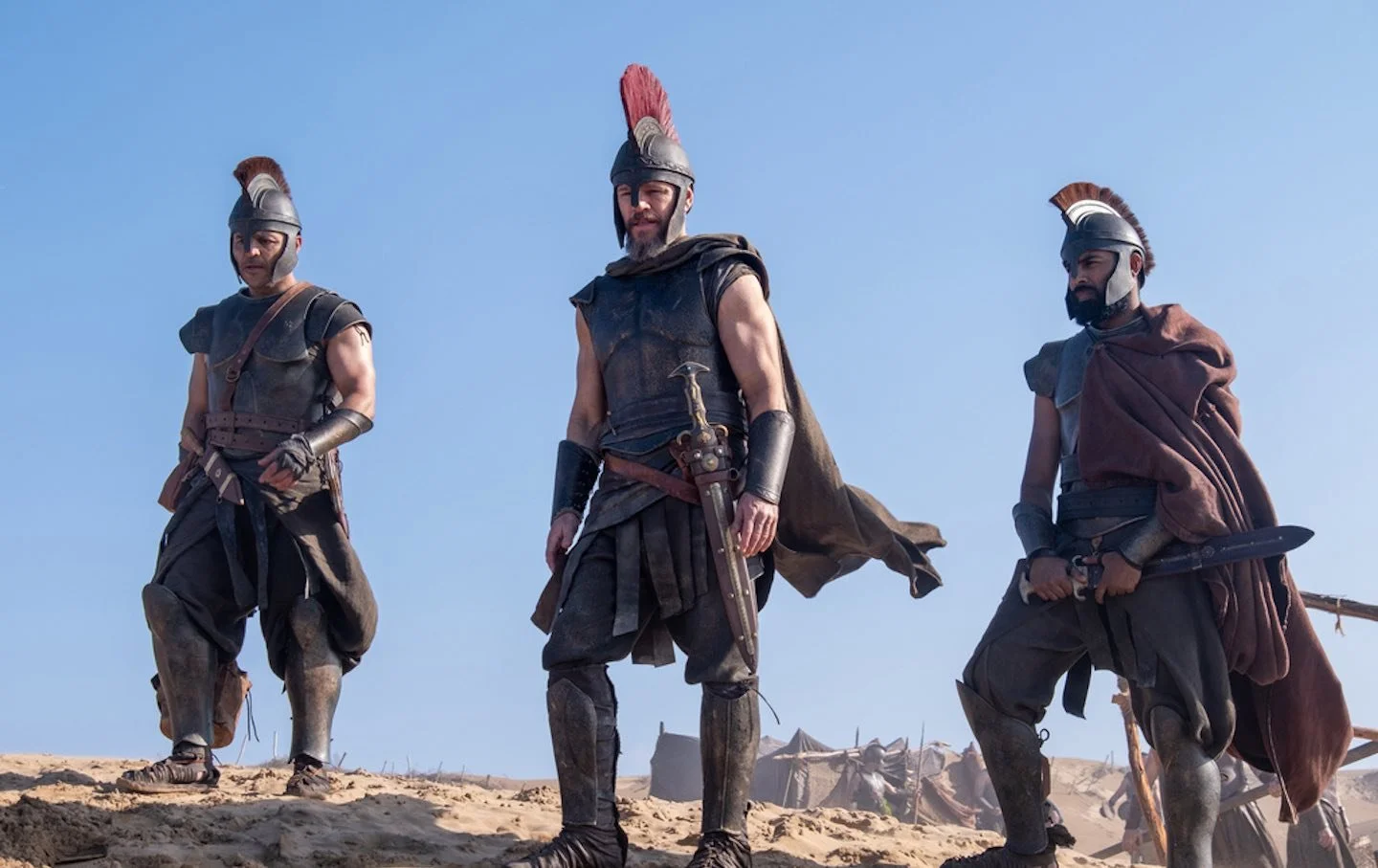
are we the baddies?
I’m just not convinced this story fits Odysseus, or the Odyssey, all that well. Homer’s Odyssey is a love song to language, to a fast talker who can charm his way out of anything even if he can’t quite charm his way back into his own life. Nolan, by contrast, sucks at dialogue. Odysseus is clunky, graceless, and unpersuasive—Matt Damon plays him as a traumatized vet—and I cannot imagine him convincing anyone of anything. The movie is at its best when the characters talk least, which is not unheard of for a war story but is absolutely WILD in a bardic poem about The Schmoozer of Ithaka.
To be fair, Matt Damon’s Odysseus is more generally unimpressive. He sells the sadness well, but not really any other shades of feeling. In particular, his Odysseus has no twinkle in his eye at all; Emily Wilson made a big deal out of how no one fucks, but that’s really just an outgrowth of Damon being too glum to fuck and the movie following his lead. Similarly, while Odysseus’ greatest trick is the Trojan Horse, Nolan never shows Odysseus coming up with the idea or (more importantly) deriving any pleasure from it at any stage. For this kind of story to work, Odysseus really has to feel smug and proud of his brilliant deception and realize the consequences later. This Odysseus is never smug, and never proud, and never derives any joy from the fast ones he pulls.
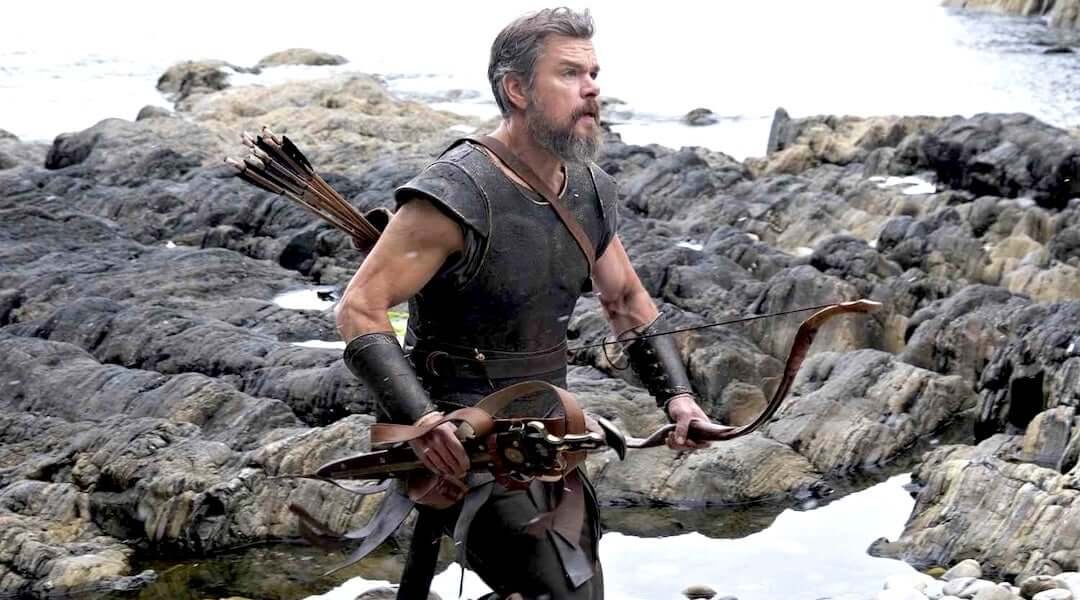
don’t yum his yuck
The result feels odd and disconnected. A resonant story is happening around Odysseus—the treatment of Agamemnon and Menelaus is fantastic—but Odysseus’ own part in that story never makes a lick of sense. Odysseus is a sad and earnest man, doing things that a sad and earnest man wouldn’t ever really do. When Odysseus fools the Cyclops, there’s no attempt to integrate it with his broader character; when he fools his men, it’s just another argument between Matt Damon and his selfish crew. Even when he fools Ithaka in his beggar’s disguise, there is no sense of prank to it whatsoever. Nolan portrays the beggar’s rags as some kind of trauma response, I think? Odysseus has definitely seen some shit, and he’s earned the right to feel strange about returning to a palace, but there is no explanation for why someone consumed with guilt at tricking people would spend so much energy tricking his wife and child. In Homer’s version this is something Odysseus likes to do; Nolan’s Odysseus doesn’t like anything, except glowering and twanging a bow for some reason.
Ironically, this movie does have a madcap charlatan. Robert Pattinson plays Antinoos as a silvertongue—charismatic, oratorical, and good enough in bed to dickmatize Mia Goth. Pattinson feels like Homer’s protagonist, not only because he’s having a blast but because he enjoys doing all the things that most of us know Odysseus for. In the theater, I felt like he Miranda Priestlied the whole thing; he’s so much more persuasive than Odysseus that you sort of root for him. Looking back, though, I wonder if there isn’t more intention here. Antinoos represents the Old Odysseus, the one he has to conquer in order to live with himself. This version makes sense, but has the drawback of being lame as hell—you just know that this Antinoos would have made Penelope very, very happy and she deserves it. Kill your son, girl! Get that fraudster dick!
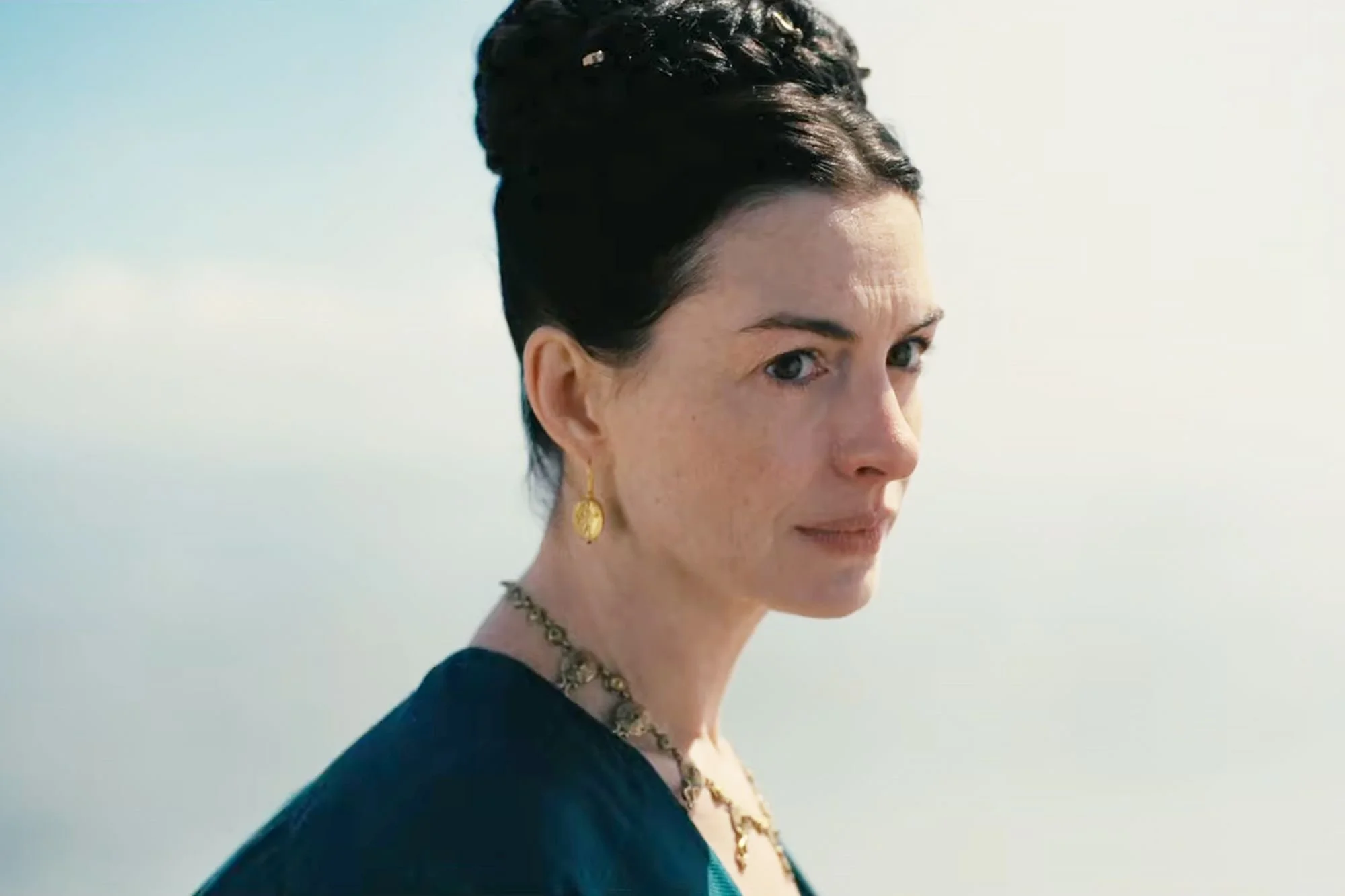
Anne Hathaway, choosing the wrong one again
Overall, this review is probably making it sound like I hated this movie and I didn’t. Nolan’s Odyssey is fantastic, in all the ways that Nolan movies tend to be fantastic, with a vibrant mythic palette that’s new but that I never want him to leave. The ways this movie falls short are more interesting—and build more on my expertise—but on balance the movie is so, so good. Nolan just needed to find a slightly different Trojan War hero to write about. Can we give her an Oresteia already?